Saturday, November 7, 2015

The Glacier Express: Panoramas in motion

The Glacier Express crosses the breathtaking Landwasser Viaduct   (wikipedia)
SWITZERLAND, November 7, 2015 – They say the Glacier Express the slowest express train in the world. 

At seven-and-a-half hours from beginning to end, it’s also the longest rail journey in Switzerland

The Matterhorn is one of the highlights of the Glacier Express rail experience  (wikipedia)
Today, after more than eight decades of service, the Glacier Express is not only the best known train trip in Switzerland, it is also the most popular.

Olberalp Pass is the highest point of the trip (wikipedia)
It began in June of 1930 when three rail companies combined routes to operate trains between Zermatt and St. Moritz.  At that time, there were three classes of service in converted passenger cars that had been redesigned into salon-style coaches.

Until 1982, the Glacier Express was only a summertime route because of the hazards of traveling through the Furka Pass in winter.  With the opening of a tunnel between Oberwald and Realp, a project which took nine years to complete, the train was finally able to provide year round travel.

The route, which links Zermatt and the Matterhorn with Chur and then Davos or St. Moritz,  is a narrow gauge railway featuring 291 bridges and 91 tunnels.  Several places along the line incorporate rack rails which allow the train to ascend and descend uncommonly steep grades in the track with comparatively minimal reductions in  speed. The company even gives passengers a souvenir wine glass with a tilted base to emphasize the steepness of some of the places along the line.
A tunnel through the Oberalp Pass made the Glacier Express a year-round excursion  (wikipedia)
The Glacier Express has always maintained a high level of service with constant upgrades that reflect advances in technology and improvements in rolling stock equipment.  All of which translates to magnificent panoramic coaches plus an elegant three-course meal which are standard components of every Glacier Express itinerary.

Through the clouds near St Moritz  (wikipedia)
The highest point of the journey is the Oberalp Pass which reaches an altitude of nearly 6,700 feet.  From towering Alpine walls of rock, to spectacular countryside with rushing mountain streams and infinite valleys, the Glacier Express is a visual feast that creates a lifetime of memories.

The Landwasser Viaduct is a highlight and a masterpiece of architectural design.  Six-arches rest on five pillars that tower 213 feet to span the Landwasser River. The viaduct is a signature structure of the Rhaetian Railway, which still owns and operates it.

The 446-foot curved track disappears into or spills out of the 709-foot Landwasser Tunnel to the delight of everyone aboard.  Thanks to the circular path of the track, passengers get a clear view of this stunning structural achievement of the combination viaduct/tunnel with its mind-boggling vistas below.
Switzerland has its own version of the Grand Canyon  (wikipedia)
Along the Glacier Express route, the train regularly tunnels through passes and passes through tunnels.  

Another popular sight comes in the canton of Graubunden where the Rhine Canyon, better known as the “Swiss Grand Canyon, is a remote haven for wildlife due to the  difficulty of access.  In fact, the rail line is the only way to access this forested region with its steep cliffs and roaring streams.

Chur is another popular starting place  (wikipedia)
The route is equally spectacular in either direction, however the most preferable choice might be from St. Moritz or Davos through Chur to Zermatt.  The reason being that Zermatt, though somewhat touristy with its pedestrian-only streets, looks more like the Switzerland that most travelers come to see.  Add the beauty of the Matterhorn and it’s a pleasant way to end the journey.

Going in the other direction, Chur has a lovely old town that is well worth exploring.  It is also the gateway to another lovely hour-long train trip which goes high into the Alps to the ski resort of Arosa.
Picturesque St Moritz sits above three lakes  (wikipedia)
St. Moritz has been a playground for the rich and famous for decades, and it lies in a beautiful setting with three lakes that dot the route into the village. 


Tilting wine glass is a popular souvenir  (wikipedia)
Finally, here’s a tip:  The Glacier Express route consists of several different rail lines.  If the fee for the Glacier Express itself  is too steep, you can still do the same route with your Swiss Rail Pass for no additional charge, although you will have to stop and change trains along the way.  And, of course, you will not have the advantage of the panoramic cars, the earphone explanations or the meal. For travelers on a budget however, it’s a great way to savor the experience without the additional cost. 

Read more travel and discover great tours at:  Magellan Travel Club 

Friday, November 6, 2015

In St. Barts, it takes LeVillage to feel at home

View of St Barts from the swimming pool at LeVillage  (LeVillage)
ST. BARTS, WEST INDIES, November 6, 2015 Christopher Columbus discovered St. Barts on his second voyage in 1493. Andre Charneau rediscovered it in 1968. Old Chris may be better known to most people, but it was the pioneering vision of Charneau, and  others like him, that uncovered the true spirit of the tiny West Indian paradise.

LeVillage co-owner Catherine Charneau
In the five centuries between Columbus and the mid-20th century, Sweden controlled the island between 1784 and 1878, and that influence remains an integral part of the island’s character even though today it is French. So much so, in fact, that it is often called the “St Tropez of the Caribbean.” 

Since Columbus, other celebrities have followed. David Rockefeller purchased two plots in 1957. Soon after the Rothschilds arrived and built an estate in a coconut grove.

The 70s brought Mikhail Baryshnikov and Jimmy Buffet and the stars having been aligning there ever since to establish St. Barts’ as a glitzy jet-setters hideaway for the past half century.

But there is another side to St Barts. The one that Catherine Charneau understands and passionately advocates to every visitor she encounters. Catherine is co-owner of LeVillage St Jean Hotel along with her three brothers. Together, they have embraced the vision of their father Andre, and captured his entrepreneurial spirit that is the essence of the island.
Gustavia Harbor is the port for St. Barts  (Taylor)
LeVillage St Jean is a metaphor for the island. Everything is there, visible to the naked eye, but to appreciate it you must peel away the layers. Celebrities come and celebrities go, but St Barts and the “idea” of LeVillage are eternal.

St Barts is glitzy but there are "hidden" assets  (Taylor)
Perhaps part of the attraction is that you have to make a little effort to visit St Barts. You must work a bit for what you get in return, but if you do, the island will reward you.

LeVillage is much the same, as are the industrious islanders who have labored to create their image and now work even harder to preserve it.

Andre Charneau was a native of Guadeloupe who came to St Barts in the late 1960s when major corporations began to infringe upon his banana business. After searching several places in the Caribbean, he settled in St Barts on a hillside overlooking St Jean Beach.
St Jean Beach is arguably the most popular beach on the island  (Taylor)
Charneau wisely chose his location to avoid the seaside which was more exposed to hurricanes. At the time, the road was little more than a pathway. Visitors were rare and the airport, which today is an attraction in its own right, had only one flight a day…if that.

Exercise room and pool at LeVillage  (LeVillage)
Virtually everything had to be imported, including water. Ironically, even today, clean water is a precious commodity valued at about ten times the cost of other places where it is abundant. As such, the Charneau’s, and other native islanders, are dedicated environmentalists, knowing all too well the value of nature and its life-giving resources.

In the early days, Andre shipped tons of hurricane-felled timber from his native Guadeloupe to create his first bungalows. Ingeniously he equipped his construction projects with cisterns for fresh water.

Later he was the first to bring air conditioning to the island.

Food is a main attraction on St. Barts (Taylor)
By 1972 he had turned a fisherman’s hut on the beach just below his property into the Beach Club, the first seaside restaurant on St Barts.

Today with 80 restaurants on the island, of which 20 are located in the capital of Gustavia, food is one of the primary attractions. Mostly French, of course, but even Jimmy Buffet’s influence will get you a great cheeseburger. Air conditioning is everywhere and now, there are several flights an hour at the air field, which is the only straight and flat place on the island.

In the beginning, LeVillage had just one bungalow, but Charneau added at least two a year until it reached its present size of 25 rooms and 2 villas.
Each room is different and each has its own unique personality with plenty of views  (LeVillage)

Eventually clients such Craig Claiborne and Greta Garbo made their way to LeVillage. They too enjoyed the family atmosphere of the property as do the “friends of LeVillage” who met there years ago and now return each February.

Some of the showers feel like a rain forest  (Taylor)
By the time she was 18, Catherine was running the hotel, and the “family” style concept remains evident in everything LeVillage incorporates into their business philosophy.

“Day trippers see St Barts,” says Catherine who is the best public relations resource on the island, “but they don’t feel St Barts, because you have to absorb it to understand it.

Taxis are expensive. Realizing the best way to experience St Barts, the Charneaus have made special arrangements with Hertz for rental car services. All the car rental agencies are available at the airport, but Hertz will even bring a car to the port if you arrive by boat.
Arriving by plane is an experience all its own  (Taylor)
The biggest challenge for Catherine, her youngest brother Bertrand, their right hand assistant, Jean-Phillippe, and Bamboo, the resident mascot, in running LeVillage is to “retain its character, without losing its identity.”

That is also true for St Barts itself.

Bamboo is the hotel mascot  (Taylor)
LeVillage is the only 4-star hotel property on St Barts, which translates to value for the traveling dollar. Each room is different. Many feature kitchens which allow guests to cook should they choose not to dine out every evening. Rates are seasonal.

LeVillage has no restaurant, but continental breakfast is included. Eggs, bacon and pancakes are available for a small extra charge. In addition to the soothing Caribbean views, the breakfast room also features a piano and comfortable sofas.

Boule is a popular pastime  (Taylor)
Today, the swimming pool has replaced one of the original cisterns. There is an exercise room and massages are also available. If you like, you can even play a rousing game of boule, or bocce ball.

As Catherine proudly notes about the ample supply of books, “We have even re-introduced reading into the culture.”

By reputation, St Barts is called “chic”, “glamorous” and “glitzy.” Catherine Charneau has another word which is more appropriate. She calls it “quality.”
Some patios even have hammocks where you can nap or just relax  (Taylor)
You see the magic of LeVillage and St Barts is subtlety. It’s all there, but it’s up to you to seek it out. Columbus may have “found” St Barts, but Andre Charneau and his family “discovered” it. 
St Barts and LeVillage go hand in hand -- Elegance without pretense   (LeVillage)
LeVillage St Jean is one place on St Barts where you can truly Vive la difference!

Read more travel and discover new tours at:   Magellan Travel Club


Friday, October 23, 2015

Charlotte’s Doug Eberhart conquers the Traveler’s Century Club

Night falls on Rio de Janeiro in Brazil -- One of 100 countries visited by Doug Eberhart  (wikipedia)
CHARLOTTE, NC, October 24, 2015 – Football season is in full swing and as every player and fan knows, 100 is the magic number. Be it 100 yards for a touchdown or 100 yards rushing or passing, 100 is the standard of excellence in America’s favorite sport.

Seeing the world up close is Doug's passion 
Perhaps that’s why former All-Ohio offensive center for Massillon Washington High School, Doug Eberhart, chose as his next landmark to travel to 100 countries. Today Eberhart measures his success in miles rather than yards but the number 100 remains the standard.

Recently Eberhart, a graduate of Princeton, “touched down” in Piran, Slovenia to become a full-fledged member of the Traveler’s Century Club; people who have visited 100 countries or more in their travels.

Like many “Centurians” Doug followed the wind and Slovenia just happened to be the country that captured the elusive trophy. As a rule Eberhart visits multiple countries when he can, not only for convenience but also as a cost and logistics factor.

Though Eberhart is an expert at finding a deal, he does not scrimp to necessarily seek out the lowest price because he knows all too well that that can be detrimental for a traveler even though it may keep his wallet a little bit fatter.
Antartica was a once in a lifetime experience, even for someone as well traveled as Doug Eberhart  (wikipedia)
Over his years of travel, Eberhart estimates he has spent between $200,000 and $250,000 to accomplish his feat, but considering the number of countries he has seen that number is relatively inexpensive. Furthermore, there is no price tag he can put on his memories or his experiences.

The most expensive trip Eberhart has ever taken was to Tahiti and Bora Bora which rang up a tab of about $8,500. Spending that kind of money is a rarity, however.
Transiting the Panama Canal  (wikipedia)

Most people do not think of football players as having an interest in seeing the world, but Doug was heavily influenced by his great uncle Eugene Jeffers who was an undercover agent for the CIA for many years. During school holidays, Eberhart and his twin brother, an All-Ohio high school quarterback, were enthralled by “Uncle Jeff's” stories of exotic places from the world’s most intriguing “hot spots.”
Iguazu Falls are one of those sights you have to experience to understand its magnitude  (wikipedia)
Eberhart also credits a French professor who brought the world alive, especially when teaching the Renaissance and the Reformation.

That laid the groundwork and Doug has been on a mission ever since. While at Princeton he went to Taipei with a friend as part of the International Student Body. During his visit he contacted a contagious disease know as “wanderlust” which is incurable. Once bitten the only thing that will stop someone is time and money.
Pha That Luang Vientiane in Laos is an example of world far different than our own  (wikipedia)
Though Doug did not initially set out to travel to 100 countries, somewhere between 2000 and 2003 he realized he wanted to set a goal of visiting at least 100 countries and territories. Eberhart is careful to qualify his dream because technically territories are not countries and determining prescisely what constitutes a country can be tricky at times.

For example, the Vatican is a country but it still feels like Rome anyway you look at it. And that’s just one tiny sample of countless other questionable destinations.

 “I always had an interest in the diversity of other countries and seeing the world through other people’s eyes,” says Doug. “I’m not interested in just checking off places for the sake of saying I have been there. I like to immerse myself in the culture as much as possible.”
Eberhart's favorite is Kenya, but he clarifies that he savors the diversity of all of Africa  (wikipedia)
The most obvious question Eberhart gets is which is his favorite country to which he says “Kenya” but actually he qualifies all of Africa in that assessment.
Paraguay is Eberhart;s least favorite destination, but someplace had to be last on the list  (wikipedia)
By contrast, his least favorite country is Paraguay which Eberhart found boring.

Like most world travelers, there are gaps in Doug’s personal itinerary: Israel, India, the Maldives, Nepal, Jordan, Poland, the Seychelles, Bhutan, Tibet and Myanmar to name a few.
Stockholm< Sweden ranks as one of Eberhart's top five cities in the world  (wikipedia)
Eberhart’s top five cities, in no particular order, are Sydney, Vancouver, Stockholm, Prague and Rio. Look closely and you will notice that somehow water makes its mark in the rankings.

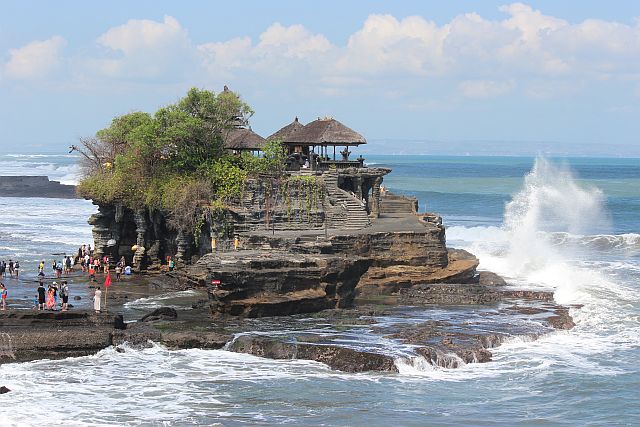
Bali is another exotic favorite  (wikipedia)
One of the best things about his job as a sales rep for Merit Medical says Doug is that it has allowed him the freedom of time to pursue his dream.

And so the quest continues as Eberhart pursues some of those “gaps.” Don’t bet against him. He has already scored once and now he is working on his second 100 following his personal “turn of the century.”

Read more travel and discover great tours at:  Magellan Travel Club


Thursday, October 22, 2015

Honfleur: The picturesque port that inspired Impressionist art

The port of Honfleur is filled with sidewalk cafes and colorful facades   (wikipedia)
HONFLEURFRANCE November 17, 2013 – Honfleur is one of those places that immediately captivates visitors. In fact, Honfleur itself is the attraction.

Not that the picturesque harbor on the northern coast of Normandy lacks history -- it is a fascinating little seaport village. It really has more to do with the charming colorful buildings that line the perimeter of the rectangular port amid a perpetual pageant of changing light. Little wonder the Impressionist artists of the 19th century were drawn to the region.

Belfry of the wooden Church of Sainte Catherine (wikipedia)
Today, more than a century and a half later, artists still favor a spot at the northeast corner of town beside the Old Dock of the harbor. Here they paint the same scene that has captured the imagination for nearly two hundred years. And yet, somehow each new interpretation seems to maintain a certain individuality despite myriad renditions that have been transferred from palette to canvas over the decades.

When native son Eugene Boudin was advised by Dutch painter Johan Jongkind to practice his craft outdoors, or en plein air, it marked the early beginnings of Impressionism. Later Boudin befriended Claude Monet, who was only 18 at the time, and convinced the young prodigy to give up doing caricatures and concentrate on landscapes. The rest is history.

Monet’s 1872 painting Impression, Sunrise, which depicts the harbor in nearby Le Havre, gave the Impressionist movement its name, though it was initially intended as a derogatory description.
Monet's Impression Sunrise gave Impressionism its name  (wikiart)
Honfleur’s glorious light is typical of the region where white cotton ball clouds can become sinister rolling gray thunderheads in mere minutes. The ever-evolving shades of shadow and light represent the character of Honfleur and provide a kaleidoscope backdrop that rivets the imagination.

Situated on the estuary of the River Seine that flows through Paris, Honfleur thrived at the beginning of the Hundred Years War when Charles V bolstered the town’s defenses for strategic purposes. It was first mentioned in the early 11th century, but it was not until the middle of the 12th century that Honfleur became a major shipping lane for goods moving from Rouen to England.
The permanent carousel is a favorite for children  (wikipedia)


During the 16th and 17th centuries, Honfleur was an important departure point for several major explorations. Binot Paulmierde Gonneville sailed to the coast of Brazil in 1503. Three years later, Jean Denis, who lived in Honfleur, traveled to Newfoundland and through the mouth of the Saint Lawrence River. In 1608, Samuel de Champlain founded the city of Quebec.. Later, in 1681, Cavalier de La Salle, discovered the mouth of the Mississippi River. Both expeditions  began from Honfleur.

That maritime flavor remains an important facet of the appeal of Honfleur today. The tiny seaport thrives with sidewalk cafes, charming galleries, narrow streets and architectural allure.
The wooden Church of Sainte-Catherine of Alexandria looks like an upside down boat  (wikipedia)
A walk around the harbor is all the orientation one needs. Just behind the harbor is the Church of Saint-Catherine of Alexandria -- the main landmark of the village. The distinct wooden structure with its engaging bell tower was constructed shortly after the Hundred Years War using naval building techniques. A second nave was added later in the 16th century. 

Le Havre at Sunset by Eugene Boudin  (wikiart)
Honfleur has four museums of note. Museum Eugene Boudin pays homage to the master who brought notoriety to the city with his art. Naturally, the town would be incomplete without a Naval Museum. Vieux Honfleur Museum focuses on the village’s history, while the Erik Satie House gets mixed reviews from travelers desiring to know more about the life of the eccentric early 20th century musician.

Saturday is market day until 1 p.m. Regional farmers bring fresh meat, fish and produce to the center of town, which adds another distinct layer of personality to Honfleur’s already seductive charms.

Occasionally a festival will pop up, but for the most part Honfleur is content to exist within its bewitching magnetism.

Access to Honfleur must be done by motor transportation, or by boat, but there is rail service to nearby Deauville and Le Havre.
The ancient wood and stone Lieutenance is one of Honfleur's landmarks  (wikipedia)


You see, Honfleur is one of those in-between places … a place that evokes optimism, a place where the whole world just seems to be right.

Read more travel and discover great tours at:  Magellan Travel Club

Saturday, October 17, 2015

European Christmas Markets rekindle the spirit of the holidays

Toy wooden soldier guards the entrance to the Christmas Market in Baden Baden  (Taylor)

UPPER RHINE VALLEYEUROPE, October 17, 2015 – Two of travel’s most popular new trends are set to converge as the holiday season approaches. The first is off-season travel and the second is European Christmas Markets.

Manger scenes have live animals  (Taylor)
Christmas Markets rekindle the lost spirit of the season within your soul. Furthermore, a visit to the Chriskindelsmariks (markets of the Child Jesus) of Europe may be the only trip a traveler ever takes where bad weather is an asset. Be it snow, sleet, freezing rain, drizzle or plain old sub-zero temperatures, it just doesn’t matter. Nothing can dampen your enthusiasm.

When the weather is rotten hot mulled wine and sausages taste better, music is cheerier, cheeks are rosier and Christmas renews itself by reaching into forgotten recesses of childhood memories.

It really doesn’t matter which Christmas Market you choose. They are everywhere. Oddly enough, though they are all basically the same, each one is unique. Some are festivals of light. Others feature local arts and crafts. Still others focus on food and entertainment.

Some markets take one square while others spread throughout a city  (wikipedia)

Many sprawl throughout a city while others center around a small main square in front of the cathedral. No matter where you go or what you choose to do, the only thing guaranteed to happen is that your spirits will soar in a personal metamorphosis that would do Ebenezer Scrooge proud.

One region especially suited for travelers during the holiday season is the Upper Rhine Valley, which includes Switzerland, France and Germany. The area is compact, making it convenient by rail, boat or car, while offering the cultural flavor of three different countries.  

Narrow streets and ancient houses add to the aura of the Christmas season  (Taylor)
There are large markets such as Strasbourg and Basel, medium sized hamlets like Baden-Baden and Freiburg and smaller towns where entire villages become a market as in Obernai. The important thing is to visit more than one because the food, music, art, crafts, lights, decorations and individual stalls vary widely from city to city and, even, from square to square.
The Strasbourg Market in France is a festival of light  (Taylor)
Though not the largest, Strasbourg features the oldest market in France. It also ranks among the best known Christmas Markets in Europe dating to the year 1570. Vienna held something called a December Market during Christmas in 1294, but it was more of a traditional market than anything to do with the season. As far as Christmas is concerned, Munich may be the oldest going all the way back to 1310.

No market is complete without huge pretzels  (Taylor)
Despite that, Strasbourg places so much emphasis on illumination that it calls itself (at least during Christmas) “the City of Light” while proudly proclaiming the title “Capital of Christmas” thanks to its role in the evolution of the Christmas Market story.

Historically, the traditional day for gifts and handing out candy in Europe was December 6th to honor the day the patron saint of Lorraine, Saint Nicholas, died in the late 4th century. Many places in Europe still observe December 6th as the day of giving.

In 1570 a protestant preacher in Strasbourg named Johannes Flinner became upset that Catholics were venerating a saint. He convinced local authorities to do away with the St. Nicholas Market. What took its place was a Christmas Market later in the month of December.
Hot wein is the drink of choice everywhere  (Taylor)


At first the market was only a three-day event held in front of the cathedral just before Christmas. Over the centuries there were several changes of venue until the market took permanent residence at Place Broglie, one of the main squares in the city. Today the market spreads throughout Strasbourg where its primary theme of light is ever-present.

In Germany, the hot mulled wine is called gluhwein while in France it is simply vin chaud, or hot wine. It is arguably the drink of choice at virtually any market, but be forewarned, especially in Germany where inhaling the spices too quickly can take your breath away until you learn to sip properly.
Bad weather is a plus that adds to the Christmas atmosphere  (Taylor)
Nativity scenes are also mood inspiring because they usually include live sheep, goats and other animals calmly grazing on hay covered floors in front of a crèche. Though Europeans long ago abandoned church-going on a regular basis, there remains a sense of serenity about live animals in a manger scene where nobody gets upset over political correctness.  Somehow tradition wins out and that adds to the ambiance of the surroundings.
Christmas markets appeal to young and old alike -- It is Charles Dickens reincarnated  (Taylor)
Savor the aromas of the season while strolling from booth to booth. Spices, cinnamon, perfumes, scented candles, hot doughnuts and pretzels permeate the frigid air and lull you into a realm of long- lost sensations.

Church bells ring out. Choirs sing in the distance. Sleigh bells jingle.
If the Christmas Markets don't rekindle your yuletide spirit, nothing will  (Taylor)
Mingle with locals. Stroll among half-timbered buildings and colorful wooden stalls. Inhale deeply and take in Christmas as you never have before. 

“Oh, come all ye faithful” for the European Christmas markets are truly a “joy to the world.”

Read more travel and discover tours at:  Magellan Travel Club